
Guides · Materials
The best shower wall materials
For most Tampa homes, porcelain tile over a proper waterproofing system is the most versatile and durable shower wall. Solid-surface or cultured panels are the low-maintenance alternative with fewer grout lines, and acrylic suits budget-driven or quick-turnaround jobs.
The visible surface is only half the decision. Every shower wall material relies on what's behind it to keep water out of the framing. Get that right and almost any of the finishes below will last; get it wrong and even the best tile will fail.
Shower wall materials at a glance
| Material | Relative cost | Maintenance | Design range | Best for |
|---|---|---|---|---|
| Porcelain tile | Moderate to high | Low tile, grout needs care | Very wide | Most showers; large-format for fewer grout lines |
| Ceramic tile | Lower to moderate | Low to moderate | Wide, especially glazed wall tile and colour | Walls, feature areas, budget-conscious tile |
| Natural stone | High | Higher; sealing, gentle cleaners | Unique, varies by slab | Statement showers where upkeep is accepted |
| Solid-surface / cultured panels | Moderate to high | Low; few or no grout lines | Moderate; solids, stone looks | Easy-clean showers, accessible showers |
| Acrylic / fibreglass surround | Lowest | Low, can scratch or dull | Limited | Budget updates, rentals, fast turnaround |
| Large-format porcelain slabs | High | Very low; minimal seams | Stone and concrete looks | Modern showers, fewer joints |
| Glass tile / glass panels | Moderate to high | Shows spotting in hard water | Accent and contemporary | Feature walls and niches |
Porcelain tile
Porcelain is dense and absorbs very little water, which makes it a natural fit for a humid Florida bathroom. It's made in every size from small mosaics to panels several feet long, and in finishes that mimic marble, concrete, wood and terrazzo convincingly. Larger formats mean fewer grout lines, which means less to clean. The trade-off is that large tiles need flat walls and careful installation to avoid lippage (uneven edges between tiles).
If you're choosing between porcelain and ceramic for the walls, our porcelain vs ceramic comparison covers the differences in detail.
Ceramic tile
Glazed ceramic wall tile is lighter and easier to cut than porcelain, and it's often where you'll find the richest colours and handmade-look finishes such as glossy subway and zellige-style tile. On a shower wall, where it isn't walked on, a good-quality glazed ceramic performs well. It's slightly more absorbent through the body than porcelain, so the waterproofing behind it and the glaze on the surface are what protect it.
Natural stone
Marble, travertine and limestone make beautiful showers, and no two walls look the same. They're also softer and more porous than porcelain. Stone generally needs sealing and cleaning with pH-neutral products, and it can etch with acidic cleaners. In areas with hard water, mineral deposits and the cleaners used to remove them can be hard on polished stone. Stone is a good choice when you want it and accept the care it needs; it's a poor choice if you want a wipe-and-go shower.
Solid-surface and cultured panels
These are large moulded or cast panels (solid-surface, cultured marble, engineered stone composites) installed in a few pieces with minimal seams. The big advantage is maintenance: with little or no grout, there's very little for mildew to grip. They suit people who want an easy-clean shower and are often used in accessible bathroom designs where smooth surfaces and integrated grab-bar backing are useful. Design choice is narrower than tile, and panels must be measured and fabricated to the space.
Acrylic and fibreglass surrounds
Pre-formed surrounds are the fastest and least expensive way to a new shower wall. Quality ranges widely: thicker, better-supported acrylic feels solid and resists flexing, while thin fibreglass can feel hollow and scratch easily. They're a practical option for a rental, a secondary bath or a quick update, and less so for a primary bath where you want the shower to be a feature.
Large porcelain slabs
Thin porcelain slabs, sometimes called gauged porcelain panels, cover an entire wall with one or two pieces. The look is clean and nearly seamless, often imitating book-matched marble without the maintenance of real stone. They're heavy and awkward to handle, need specialised installation, and access into the bathroom has to allow the panels to be carried in.
What goes behind the wall matters most
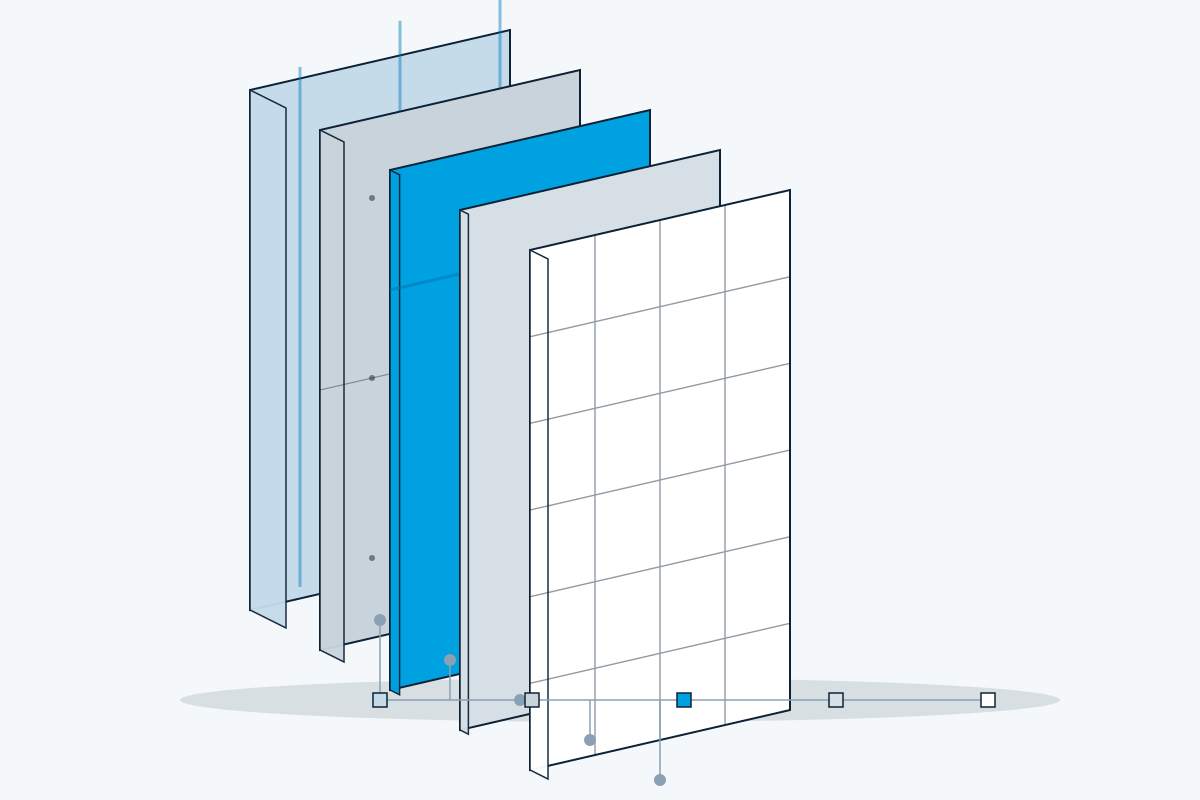
Tile and grout are not waterproof on their own. Water passes through grout and, over time, reaches whatever is behind it. A properly built shower uses a waterproofing layer behind the finish:
- Cement backer board + liquid membrane
- A cement board substrate with a brushed or rolled waterproofing membrane over it, including seams and corners.
- Sheet membrane systems
- A bonded waterproof sheet applied over the substrate, with preformed corners and seals around valves and niches.
- Foam board systems
- Lightweight waterproof foam panels with sealed seams. Flat and easy to shape for niches and benches.
- Traditional mortar bed
- A mud-set method with a vapour barrier behind it. Still used by some installers, particularly for floors.
What you want to avoid is tile over ordinary drywall, or over "green board" (moisture-resistant drywall) inside the wet area of the shower. It's a shortcut that often looks fine for a few years and then fails, with damage hidden inside the wall. The shower floor, curb, niche and bench all need to tie into the same waterproofing system, with the pan sloped correctly to the drain.
Choosing for a Florida bathroom
- Low-absorption surfaces (porcelain, glazed ceramic, solid-surface) handle constant humidity best
- Fewer grout lines, or a high-performance grout, cut down on cleaning
- Matte or textured finishes hide water spots better than high-gloss in hard water areas
- An exhaust fan vented outdoors protects any wall material
- Plan niches and benches into the waterproofing from the start, not as an afterthought
The glass enclosure is the other large surface in a shower, and pairs with the wall material; frameless glass shows off tile, while framed glass is more forgiving of imperfect walls. See frameless vs framed shower doors.
If you're redoing a shower and want to weigh these options for your space, our Tampa shower remodeling service covers the full build, from waterproofing to glass.
Book a consultation
Start with a conversation about your bathroom
Call and tell us what isn’t working and what you’d like instead. We’ll talk through scope and materials, arrange a visit, then put it in writing.
- Which bathroom, and roughly how old it is
- What bothers you now: leaks, dated tile, a tub you don’t use
- Any photos or ideas you’ve saved
Call us
(813) 535-5487 Tap to call nowOpen daily, 7:00 AM to 10:30 PM
501 E Kennedy Blvd, Tampa, FL 33602