
Bathtubs
Bathtub remodeling and replacement in Tampa
Swap a chipped, shallow builder tub for one you'll actually use: a better alcove tub, a deep soaker, or a freestanding tub with a floor-mounted filler. We handle the tub, the surround and everything behind them.
Open daily, 7:00 AM to 10:30 PM · Consultations across Tampa Bay
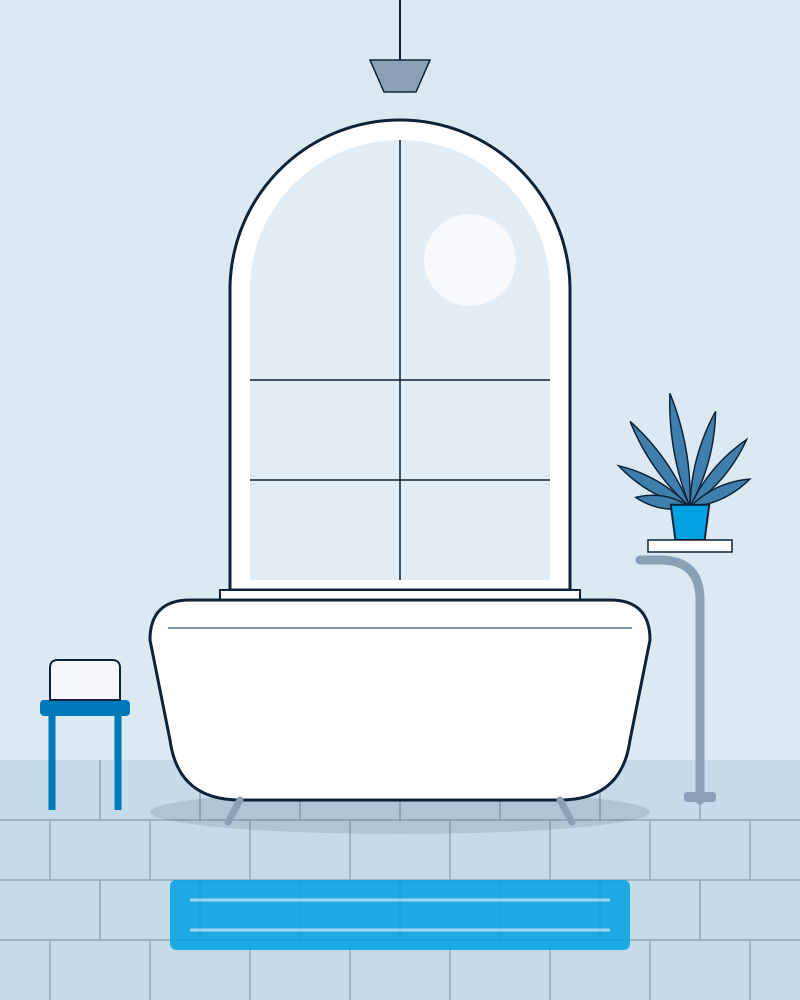
For people who want to keep a tub, and want a better one
Plenty of homeowners are removing bathtubs, and we build a lot of tub-to-shower conversions. But a tub still earns its place in many homes: families with young children, anyone who genuinely soaks, and houses where the hall bath needs at least one tub for resale. This page is for those projects.
Most Tampa-area bathtubs we see fall into one of three groups: an original enameled steel or cast iron tub in an older house, a fiberglass or acrylic builder tub in a newer one, or a large corner or jetted tub from a 1990s or 2000s primary bath that takes up space and rarely gets used. Each calls for a different approach.
Tub types
Which bathtub suits the room
- Alcove tub
- Enclosed on three sides with a shower above. The most space-efficient choice, and the standard for hall bathrooms. Upgrading usually means a deeper basin, better slip resistance and a new tiled or panel surround.
- Drop-in or undermount
- Set into a tiled deck or platform. Good for a built-in look, though the deck adds footprint and more surfaces to clean.
- Freestanding tub
- A sculptural tub that stands on the floor, usually with a floor-mounted or wall-mounted filler. Needs clearance around it to look right and to clean behind.
- Soaking tub
- Deeper water for a proper soak. Available in alcove, drop-in and freestanding forms. Check your water heater can fill it with hot water.
- Walk-in or low-entry tub
- A lower step-over or a door in the side. Worth considering alongside a curbless walk-in shower when access is the main goal.
Materials
What the tub is made of
Material affects weight, warmth, durability and cost.
- Acrylic is light, warm to the touch and comes in many shapes. Quality varies, so the thickness and reinforcement matter.
- Enameled steel is inexpensive and hard-wearing but can chip and feels cold.
- Cast iron holds heat well and lasts a long time, but it's very heavy. Upstairs installations need a structural check.
- Solid-surface and stone resin are popular for freestanding tubs, with a matte finish and good heat retention. They're heavy too.
Florida considerations
Tubs in Tampa homes
On a slab, the tub drain sits in the concrete, so keeping the tub in its existing position avoids trenching. Moving a freestanding tub to the middle of the room is possible, but the drain has to follow it.
Around an alcove tub, the surround is a wet wall like any shower. We build it with cement or foam board and a waterproof membrane, not green board and tile, because humidity here gives any weak point plenty of time to fail.
Hard water can leave rings and film on tub surfaces. Smooth, non-porous finishes and a good filler aerator make upkeep easier.
Process
How a bathtub replacement works
Measure and choose
We measure the alcove or floor space, doorways and hallways (big tubs have to fit through them), then help you choose a tub and filler.
Remove the old tub
Old tubs usually come out with the surround. Cast iron is often broken up in place. Damage to the subfloor or framing gets repaired.
Plumbing
New drain and overflow, a new valve for alcove tubs, and supply lines for any floor-mounted filler.
Set and level
The tub is bedded and leveled so it doesn't flex or creak, then connected.
Surround and finish
Backer board, waterproofing, tile or panels, trim, caulk and any glass or curtain rod.
Budget
Bathtub replacement cost factors
Tub style and material
A standard acrylic alcove tub and a stone-resin freestanding tub sit far apart.
Filler and valve
Floor-mounted fillers need supply lines run through the floor or slab.
Surround
Tile height and style, or solid panels.
Relocation
Moving the tub means moving the drain.
Removal
Heavy old tubs and difficult access add labor.
Hidden damage
Rot or leaks found under the old tub.
See how a tub fits into the whole budget on our bathroom remodel cost page.
Not sure what your bathroom needs?
A short call is usually enough to tell whether it’s a refresh, a rebuild or somewhere in between.
Keep or remove?
Not sure whether to keep a tub at all?
It's one of the most common questions we hear. If your home has only one bathroom with a tub, many owners keep it there and put a shower in the primary bath. Our article on walk-in showers vs bathtubs for resale looks at both sides.
We replace bathtubs across the Tampa area, from Carrollwood to Brandon. View all service areas.
Bathtub questions
Can a new tub go in without redoing the tile?
Rarely. The tub flange sits behind the bottom row of tile and backer board, so replacing an alcove tub nearly always means replacing at least the lower part of the surround. Most people redo the full surround at the same time.
How much space does a freestanding tub need?
Beyond the tub's own footprint, allow room on the sides and ends so you can clean around it and so it doesn't look squeezed. We'll lay it out on your floor plan before you choose a model.
Can you install a cast iron tub on a second floor?
Often, yes, but a filled cast iron tub is very heavy. The floor framing needs to be checked first, and access for carrying it upstairs has to be planned.
Book a consultation
Planning a new bathtub?
Tell us which tub you have now and what you'd like instead.
- Which bathroom, and roughly how old it is
- What bothers you now: leaks, dated tile, a tub you don’t use
- Any photos or ideas you’ve saved
Call us
(813) 535-5487 Tap to call nowOpen daily, 7:00 AM to 10:30 PM
501 E Kennedy Blvd, Tampa, FL 33602